RULES WHEN SIGNALLING ON THE ROAD
When driving, it is essential to communicate your intentions to other road users so that they can react in time and safely share the road with you.
Signals - whether given by indicator lights or by hand - must always be clear, visible, and given in good time before taking any action.
General Rules for Signalling
• Always make sure that any signal you give can be clearly seen by other drivers, motorcyclists, cyclists, and pedestrians.
• Signals must be given well in advance of turning, stopping, or changing lanes to give other road users enough time to react.
• Check your mirrors and blind spots before signalling to confirm it is safe to carry out your intended manoeuvre.
• Continue the signal until the action is completed, for example, until you have finished turning or changing lanes.
Hand Signals
Although vehicles are fitted with indicator lights, you may use hand signals when:
• Your indicator lights are not working, or
• You are driving a vehicle that does not have indicators.
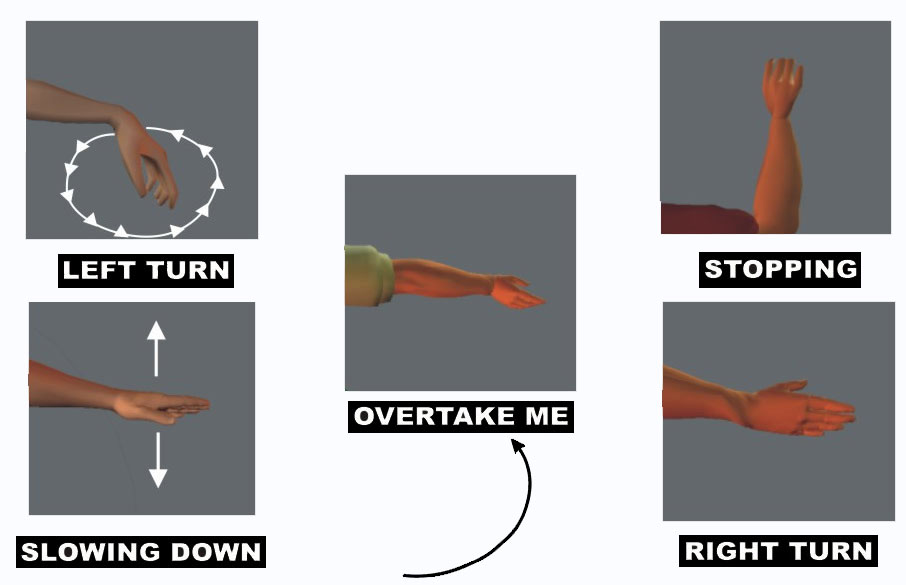
The recognised hand signals are as follows:
I am Turning Left- Extend your left arm straight out horizontally from the driver's window, with your hand flat and palm facing forward.
Overtake Me - Extend your right arm horizontally and move it forward and backward in a waving motion to indicate that the vehicle behind you may pass.
I am Stopping - Extend your right arm straight out horizontally and move it up and down with your palm facing downward to signal that you intend to slow down or stop.
I am Turning Right - Extend your right arm straight out horizontally from the driver's window, with your hand flat and palm facing forward.
Move to the Left or Right Before Turning or Stopping - Where necessary, position your vehicle towards the left or right-hand side of the road before turning or stopping. This makes your intention clearer and allows other drivers to react in good time.
Special Rule for Freeways
No hand signals may be used on a freeway, except in an emergency (for example, if your indicators have failed and you need to warn other drivers).